

Mathew Epps MD, MS, DABS
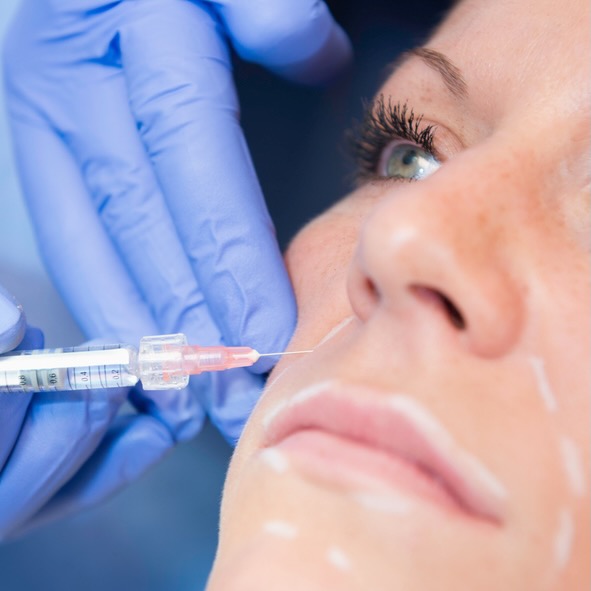
As we age, we lose volume in our midface resulting in a deflation of the surrounding tissue. Volume loss leads to deflated skin that becomes prominant around tethered areas like the tear troughs, nasolabial fold, and marionette lines. Placement of dermal fillers injected into different areas of the face is a common strategy to restore volume and a youthful look. While it is common for individuals to seek filler injections to address the appearance of deep nasolabial folds, practitioners may opt for alternative methods to achieve more natural and harmonious results.
Choosing not to fill the nasolabial fold with dermal filler is a strategic approach taken by some practitioners, based on an understanding of facial anatomy and the potential risks associated with this practice. The nasolabial fold, a prominent facial feature that courses from the lip commissure to the nasal ala (piriform fossa), is formed by deep tightly bound fibrous tissue and muscular attachments and plays a crucial role in facial expressions.
Injecting dermal filler directly into the nasolabial fold tends to create an unnatural contour to this area that has a “worm-like” appearance. Further, when dermal fillers are injected into this area, there is a risk of overcorrection or over-filling, leading to an unbalanced and distorted facial appearance. WIth tiime, the ligaments close to the filler create resistance and may cause the filler to migrate around the fold. This migration can result in visible irregularities and long-term dissatisfaction for the patient.
A more sophisticated approach that some practitioners adopt involves addressing the surrounding areas, such as the cheeks and the piriform fossa, to efface the nasolabial fold indirectly. By strategically volumizing these adjacent regions, the focus shifts from the fold itself to creating a harmonious facial balance. This technique aims to minimize the shadow created by the nostrils, which can accentuate the nasolabial fold’s appearance.
Effacing the nasolabial fold by enhancing the cheeks and piriform fossa is often seen as a more balanced and nuanced strategy. It allows practitioners to restore volume and provide a lift to the mid-face, subtly reducing the prominence of the fold while maintaining a natural and attractive facial expression. This method also carries a lower risk of developing the unnatural, “overfilled” look and minimizes the likelihood of filler migration, thus offering a more sustainable and aesthetically pleasing result. If the fold remains prominent, then a pliable filler such as Restylane Defyne and/or Refyne can be injected in a complex series of criss-crossing injections or fence-like pattern to soften the fold in a conservative manner where needed.
While dermal fillers can be valuable tools in facial rejuvenation, understanding the intricacies of facial anatomy and taking a holistic approach to treatment is essential. Avoiding direct nasolabial fold filling in favor of addressing adjacent areas can yield more natural and long-lasting outcomes, ensuring patients maintain a youthful appearance without sacrificing facial balance and expression. By carefully considering the unique needs of each individual, practitioners can tailor their approach to achieve optimal results that stand the test of time.
- More on Dermal Filler
- More on How To Restore A Youthful Face in Three Steps
- More on Restoring The Troublesome Areas of the Lips and Perioral Region
- More on Enhancing Facelift Results with Non-Surgical Treatments
- More on Gaunt Facial Appearance Can be Treated with Dermal Fillers
- See This Article in the Bluffton Sun, November 7, 2023